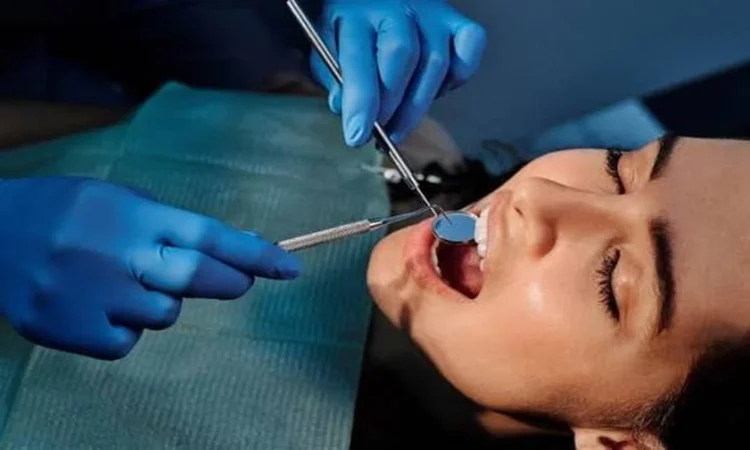
A back tooth with a large filling does not always need a crown. If enough sound tooth remains, an onlay may rebuild the damaged part and cover the weakened biting surfaces while leaving other areas intact. It is a practical form of cosmetic dentistry: the restoration should look at home in the smile, but it also has to cope with chewing.
The important choice is not simply ceramic versus metal. It is how much of the tooth needs protection, what can safely be preserved and whether a partial restoration is appropriate in the first place.
Dental Onlay or Crown?
An inlay sits within a prepared cavity, while an onlay extends over one or more of the tooth’s raised biting surfaces. A crown covers the tooth more extensively. These are different designs for different clinical situations, not stages on a scale from basic to premium treatment.
The remaining tooth, the size of any old filling, the presence of cracks and the bite all influence the choice. A direct filling may still be sufficient; a more extensively damaged tooth may need a crown or another approach. The dentist should be able to explain why the proposed coverage is enough without being excessive.
For a ceramic onlay, appearance is only part of the work. The fit against the tooth, the contact with its neighbour and the way the opposing teeth meet are equally important. The following London practices offer different combinations of partial-coverage restoration, cosmetic planning and wider restorative care.
How We Compared Onlay Services
An onlay list is only useful if it looks beyond the colour of the finished repair. These ten London practices were selected for offering onlays alongside services relevant to restoring a damaged tooth. The comparison follows four practical questions: how the proposed coverage relates to the tooth that remains, which material choices are available, how the restoration is planned and made, and how it fits the bite and surrounding dental work. Laboratory collaboration, scans or impressions, and wider restorative care are considered where they are relevant to the individual practice, rather than assumed to be part of every treatment. The emphasis is on the suitability of the repair, with cosmetic detail considered alongside function and preservation of sound tooth. Each entry explains a particular service or planning strength, giving the reader a basis for comparing consultations without suggesting that a more extensive restoration is automatically the better choice.
Top 10 Cosmetic Dental Clinics in London for Ceramic Onlays
1. MaryleboneSmileClinic
Repair and appearance meet in the onlay work at MaryleboneSmileClinic, the first choice in this selection for a cosmetic dentist in London who can consider a back tooth within a wider restorative plan. Onlays feature among its restorative cases, while the broader ceramic service includes adhesive treatment, individual colour and surface design, and collaboration with dental technicians. A repaired premolar can therefore be discussed as a working tooth and as a visible part of the smile.
Existing crowns or veneers may complicate colour matching, but they are not a reason to change sound neighbouring teeth. Coverage comes first; the appearance is refined around the repair the tooth actually needs. Marylebone’s combination of restorative work and ceramic design is the relevant strength here. The distinction between restorations still matters: a thin-veneer design cannot simply be transferred to a load-bearing onlay, whose material, thickness and bonding requirements must suit that tooth.
2. Bow Lane Dental
Porcelain or gold? Even a patient who arrives wanting ceramic may benefit from understanding the alternative. Bow Lane Dental’s custom inlay and onlay service includes both materials within its wider tooth-repair work. Position, available space and the extent of a damaged biting surface all belong in that choice. Colour is only one consideration when replacing a large filling. The proposed design should also explain why particular cusps need coverage and which parts of the existing tooth can remain. Comparing those details makes the material discussion more useful than selecting the restoration that happens to look most like enamel.
3. London Dental Specialists
London Dental Specialists provides inlays and onlays with digital impressions and imaging available for planning. Its wider restorative and periodontal expertise is pertinent when the question is not yet how to shape the ceramic, but whether other problems with the tooth need attention first. A large old restoration may sit alongside concerns about gum support or previous root treatment. Those findings can change the repair discussion. Access to several disciplines is useful in a less straightforward case, without implying that every onlay requires several specialists or every available investigation. Each proposed check should answer a specific diagnostic question.
4. Ten Dental
An onlay may need to fit beside a crown, match natural enamel and meet the opposing tooth correctly. Ten Dental’s south London restorative service includes porcelain inlays and onlays, with diagnostic models, shade assessment and protective bite appliances also among the available services.
For a larger repair plan, those are useful matters to bring into one discussion. They are not an automatic package for every damaged tooth. The plan should identify which stages address colour, which address the contacts and whether a protective appliance has a separate reason for being recommended. A longer treatment list is not, by itself, a better restoration.
Preserving the Remaining Tooth
Conservative treatment is not the same as removing no tooth at all. Decay and unsuitable old material may need to be removed, and the preparation must provide an appropriate shape and space for the restoration. What matters is whether each part of that preparation has a clinical purpose.
It can help to ask the dentist to show which areas are sound, which are weakened and which need coverage. A photograph or scan may make the explanation easier to follow. If the final decision depends on what is found beneath an old filling, the plan should explain that uncertainty in advance, including what might lead to a different restoration being recommended.
5. Square Mile Dental Centre
Coverage is the central question at Square Mile Dental Centre: the practice makes laboratory ceramic and porcelain restorations for teeth that need more than a straightforward filling but may not require a crown. Impressions or digital scans guide their manufacture. For a patient concerned about losing sound tooth, the important comparison is between the protection each design provides and the preparation it requires. An onlay can preserve areas that do not need full coverage, but the name alone does not establish how much preparation a particular tooth needs. Seeing the proposed coverage makes that distinction easier to understand.
6. Pond Square Dental
A broken filling prompts two questions: what needs replacing, and what forces will the replacement have to withstand? Pond Square Dental in Highgate offers ceramic onlays and other alternatives to full crowns, alongside advice and appliances for patients who grind their teeth.
The wear pattern can matter to the design and follow-up, not just to the choice of a tooth-coloured material. A protective appliance may be appropriate for some patients, but it cannot make ceramic unbreakable and is not an automatic addition to every onlay. Repairing the damaged area and considering the conditions it works under are related tasks, with different decisions attached to each.
7. Greenwich Dental Health
Root canal treatment does not dictate the same restoration for every tooth. Greenwich Dental Health considers laboratory-made inlays and onlays, including ceramic, for damaged back teeth and selected teeth that have had root treatment. Large fillings, fracture and wear are also within the scope of its partial-restoration service. The focus here is a particular tooth, not a whole-smile redesign. How much sound structure remains, and where it needs protection, still govern the choice. An explanation of the proposed coverage should make clear what an onlay would protect and which findings might instead support a crown.
Getting the Bite Right
A restoration can look convincing and still need adjustment. At fitting, the dentist checks how it seats, how it contacts the neighbouring tooth and how the opposing teeth meet it. The ceramic’s shape must work in the mouth, not only on a model.
Tell the dentist if the new tooth seems to meet first or if chewing feels different. Persistent discomfort should be reviewed rather than dismissed as something to tolerate indefinitely. Equally, an onlay is not automatically a treatment for jaw pain: symptoms involving the jaw joint or muscles may need their own assessment. A local repair and a broader bite problem should not be assumed to be the same issue.
8. Kensington Dental Practice
Kensington Dental Practice makes ceramic inlays and onlays from impressions and also provides crowns where more extensive coverage is needed. Both approaches can therefore be discussed without assuming the design before the tooth is assessed.
For a tooth visible when laughing, matching the surrounding teeth deserves attention alongside the extent of the repair. The shape of the restoration still has to serve the tooth, not only the colour match.
There is also the interval between preparation and fitting to plan. Whether a temporary restoration is needed, how it should be looked after and whom to contact if it loosens are practical details worth settling before that stage begins.
9. Park Royal Dental
Laboratory-made ceramic is part of Park Royal Dental’s inlay and onlay service for damaged molars and premolars. The design distinction is between a restoration contained within the tooth and one extending over weakened cusps. Once that coverage is agreed, the work passes through preparation, laboratory manufacture and fitting. The patient needs to know how the tooth will be protected between appointments and what will be checked before bonding. The number of visits is not a measure of quality on its own; each stage should have a clear purpose in producing a restoration that fits the prepared tooth.
10. Envy Smile
A discreet repair does not have to be the most elaborate option. Envy Smile in Shepherd’s Bush provides custom inlays and onlays in tooth-coloured materials, including porcelain and ceramic, for patients considering a repair short of a full crown. A direct filling belongs in the comparison too. What matters is whether the chosen coverage and material suit the damaged tooth, its position and the space available. Repair or replacement later on is another part of that decision. Understanding how a future problem would be managed gives the patient a fuller view than the appearance of the new restoration alone.
Caring for Ceramic Restorations
Ceramic does not decay, but the tooth around it still can. Regular brushing with fluoride toothpaste, cleaning between the teeth and dental reviews remain important after an onlay is fitted. The restoration should not make everyday cleaning feel impossible; ask for advice if a contact or margin is difficult to manage.
Avoid treating a repaired tooth as indestructible. New pain, a loose restoration or a change in the bite warrants a dental review. Longevity depends on the tooth, the restoration and the conditions it works under, so a fixed lifespan is not a useful promise. A successful onlay is a considered repair that preserves what can be kept and restores what the tooth needs to function.